
If you’re drowning in debt, shame often arrives before the paperwork.
Creditor calls. Garnishment. That quiet fear that asking for help means you’ve failed — especially if faith matters to you, and “pay what you owe” has been ringing in your ears.
Here’s the part most people never hear: the idea that a person deserves a fresh start is not a loophole invented by modern lawyers. It shows up in some of the oldest law we have, in Scripture, and — yes — in the United States Constitution itself.
This is the story of where bankruptcy comes from, and why Michigan families still use Chapter 7 today without needing to apologize for wanting their life back.
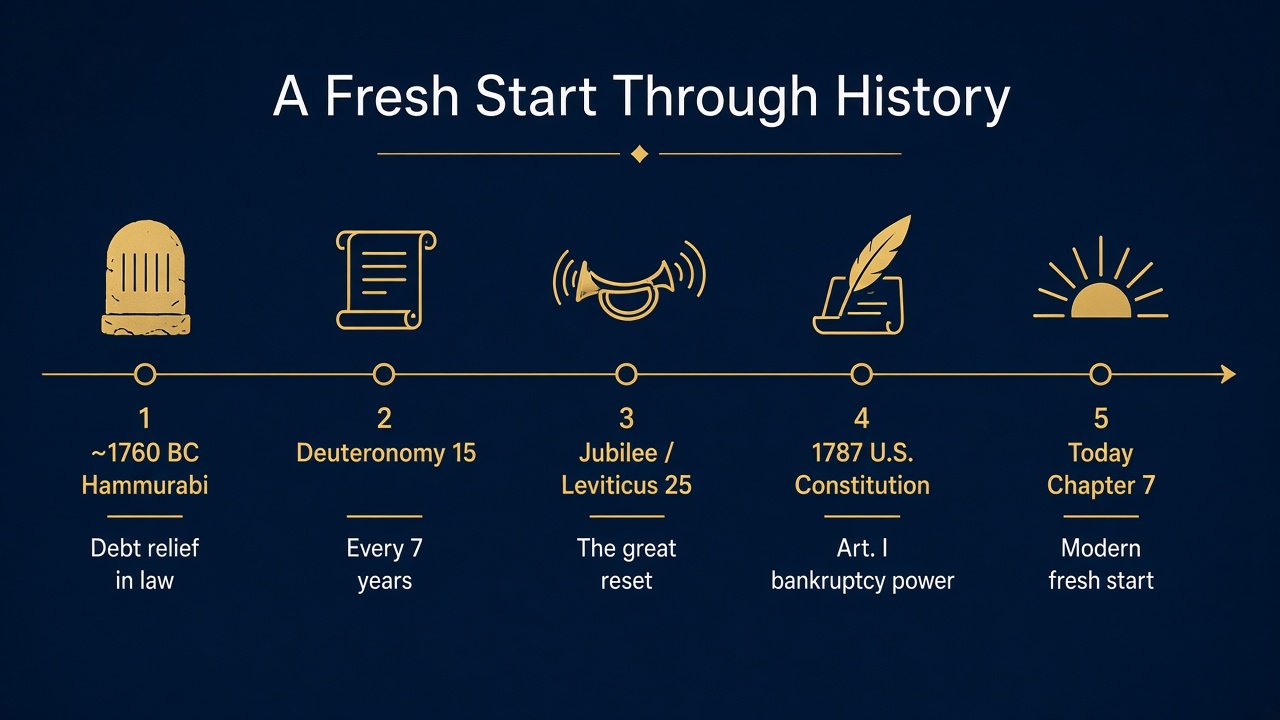
A Fresh Start Through History timeline — Hammurabi, Deuteronomy, Jubilee, Constitution, Chapter 7
Long before “Chapter 7,” societies built exits from debt
Debt is as old as civilization. So is the problem of what happens when debt becomes impossible.
In ancient Babylon, King Hammurabi’s famous law code (around 1760 B.C.) is remembered for harsh penalties — but it also carved out something surprisingly humane: a path for a debtor to work through what they owed on a defined timeline, rather than being crushed forever. The details differ from modern bankruptcy, but the instinct is familiar: a community that never lets people stand up again eventually collapses under the weight of the broken.
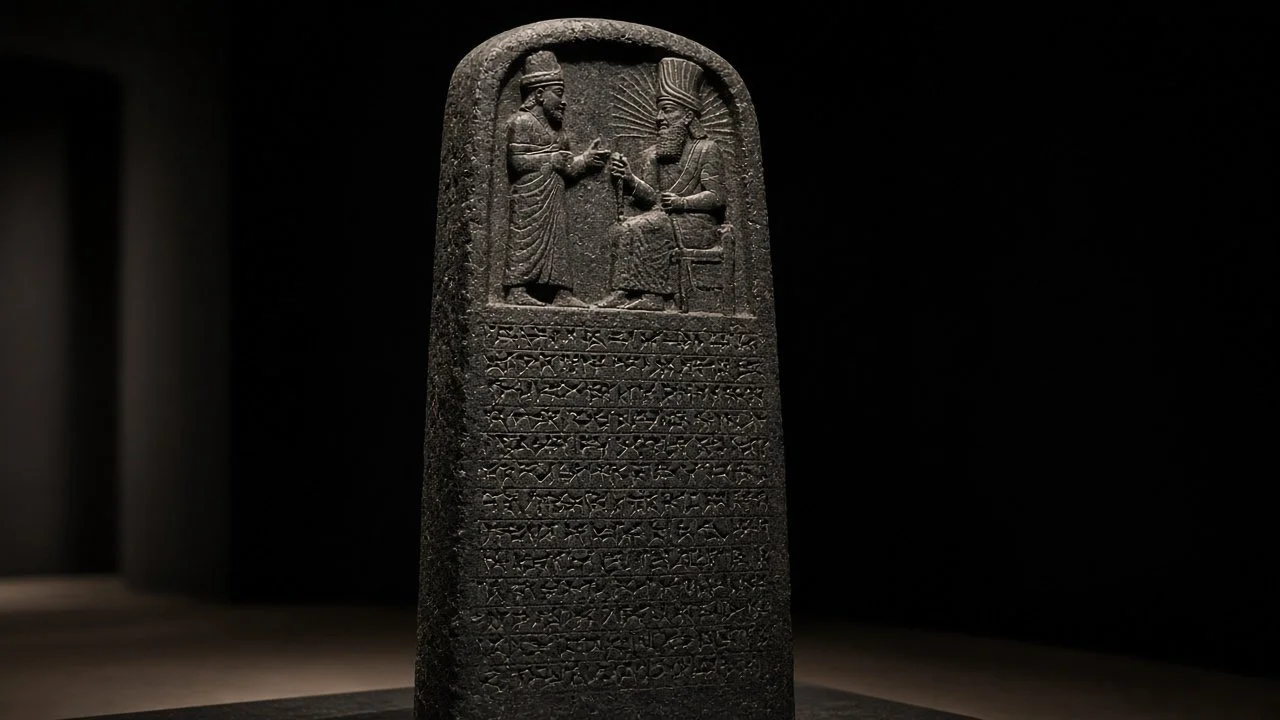
The Code of Hammurabi stele — among the earliest written law collections that grapple with debt and relief.
Scripture debt release: every seven years and the Jubilee
For many Christians wrestling with guilt about filing, the Bible is not silent about debt forgiveness.
Deuteronomy 15:1-2 describes a rhythm of release:
At the end of every seven years you must cancel debts. Every creditor shall cancel the loan he has made to his fellow Israelite. He shall not require payment from his fellow Israelite or brother, because the Lords time for cancelling debts has been proclaimed.
That sabbatical-year release was not get out of paying if you feel like it. It was a structured mercy built into the life of the community so debt would not become a permanent underclass.
Then comes the bigger horizon: the Jubilee in Leviticus 25. Traditionally tied to the fiftieth year, Jubilee language is about restoration land returning, people released, a reset button on economic captivity. Popular writing often blends every seven years and Jubilee together; they are related ideas with different timing.
None of this is a verse-by-verse map of the U.S. Bankruptcy Code. Scripture is not a filing checklist. But it is a powerful answer to the whisper that seeking a lawful fresh start must be shameful: mercy toward the overwhelmed debtor is not a modern invention. It is an ancient moral instinct.
For a deeper faith discussion, see our post: What Does the Bible Say About Bankruptcy? https://www.michiganbankruptcyfirm.com/blog/bankruptcy-and-the-bible
A quick side note: where the word bankruptcy comes from
Even the word has a story. In medieval Italian city trading, a merchant who could not pay might have their bench or counter broken banca rotta a public sign that the business was finished. English later borrowed the idea as bankruptcy.
The image is dramatic. The point for our purposes is simpler: for centuries, societies have needed a formal way to say this debt story ends here now rebuild.
The Founding Fathers put bankruptcy in the Constitution
When Americans talk about constitutional rights, they rarely mention this one but it is there.
Article I, Section 8 of the United States Constitution gives Congress the power to establish uniform Laws on the subject of Bankruptcies throughout the United States.
The Founders did not paste a full bankruptcy code into the Constitution. They did something more foundational: they decided that a national, consistent system for dealing with financial failure belonged to the federal government from day one. Fresh starts were not supposed to depend on which state you happened to live in, or which local faction controlled the rules.
That clause is why we have a national Bankruptcy Code today including the Chapter 7 fresh start Michigan residents still use.

The Constitution’s bankruptcy clause made a nationwide fresh-start system a federal responsibility.
We have had different federal bankruptcy statutes across U.S. history. The modern framework most people recognize grew especially from the major reforms of the twentieth century, including the system shaped by the Bankruptcy Reform Act of 1978 the backbone of today’s Chapters. The tools changed. The constitutional idea stayed: Americans get a lawful path to start over.
We work by phone and video statewide, with offices in Royal Oak and Flint. In the last 20 years, our team has helped over 15,000 clients in Michigan get the fresh start they deserve. Consultations are free and we have never turned a client away due to money.
Call 866-473-1996 for a free consultation (as little as $0 down).
Royal Oak: 248-246-6536. Flint: 810-471-4113
Learn more:
Chapter 7 Bankruptcy - https://www.michiganbankruptcyfirm.com/solutions-financial-challenges/chapter-7-bankruptcy
Stop Wage Garnishment in Michigan - https://www.michiganbankruptcyfirm.com/blog/stop-wage-garnishment-michigan
What Does the Bible Say About Bankruptcy? - https://www.michiganbankruptcyfirm.com/blog/bankruptcy-and-the-bible
Debt Relief Resources - https://www.michiganbankruptcyfirm.com/debt-relief-resources
FAQ
Is bankruptcy only a modern American idea?
No. Debt relief appears in ancient law codes and in Scriptures debt-release and Jubilee traditions. The U.S. Constitution then made uniform bankruptcy laws a federal power.
Did the Founding Fathers write a full bankruptcy code into the Constitution?
They wrote the power for Congress to create uniform bankruptcy laws (Article I, Section 8). Congress then enacted the statutes over time.
Does the Bible say filing bankruptcy is a sin?
The Bible does not address the modern Bankruptcy Code by name. It does speak about debt, honesty, mercy, and scheduled debt release. Many Christians find peace filing when it is the honest, lawful path forward and still talk with their pastor. More here: https://www.michiganbankruptcyfirm.com/blog/bankruptcy-and-the-bible
What is the next step in Michigan?
A free consult. Call 866-473-1996. We will look at garnishment, Chapter 7 eligibility, and the cleanest path to a fresh start.
Royal Oak Law Office
25600 Woodward Ave. Ste. 201
Woodward Building
Royal Oak, MI 48067
248.246.6536
Flint Law Office
2387 S. Linden Rd. Suite B-128
Flint, MI 48532
810.471.4113
